MOUNT KUN
Expedition OverviewThe climb
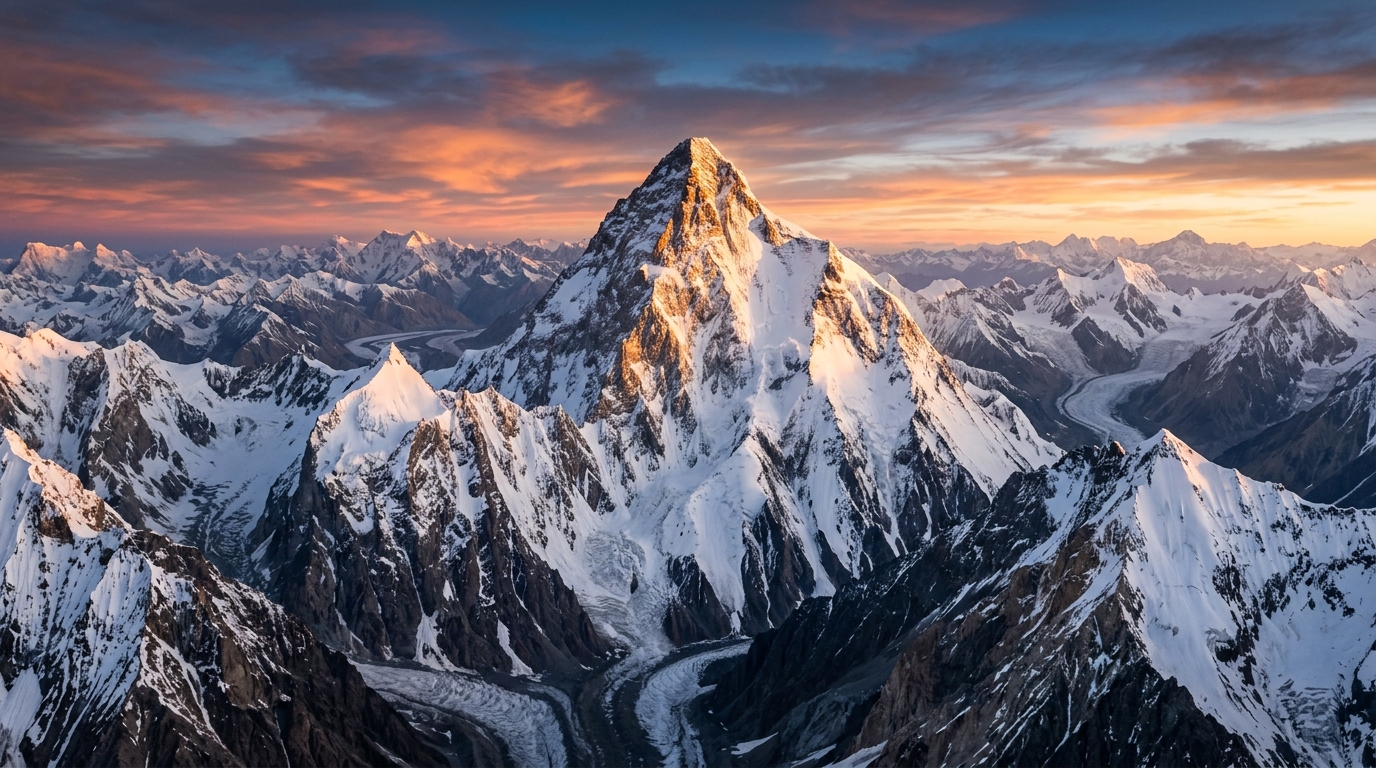
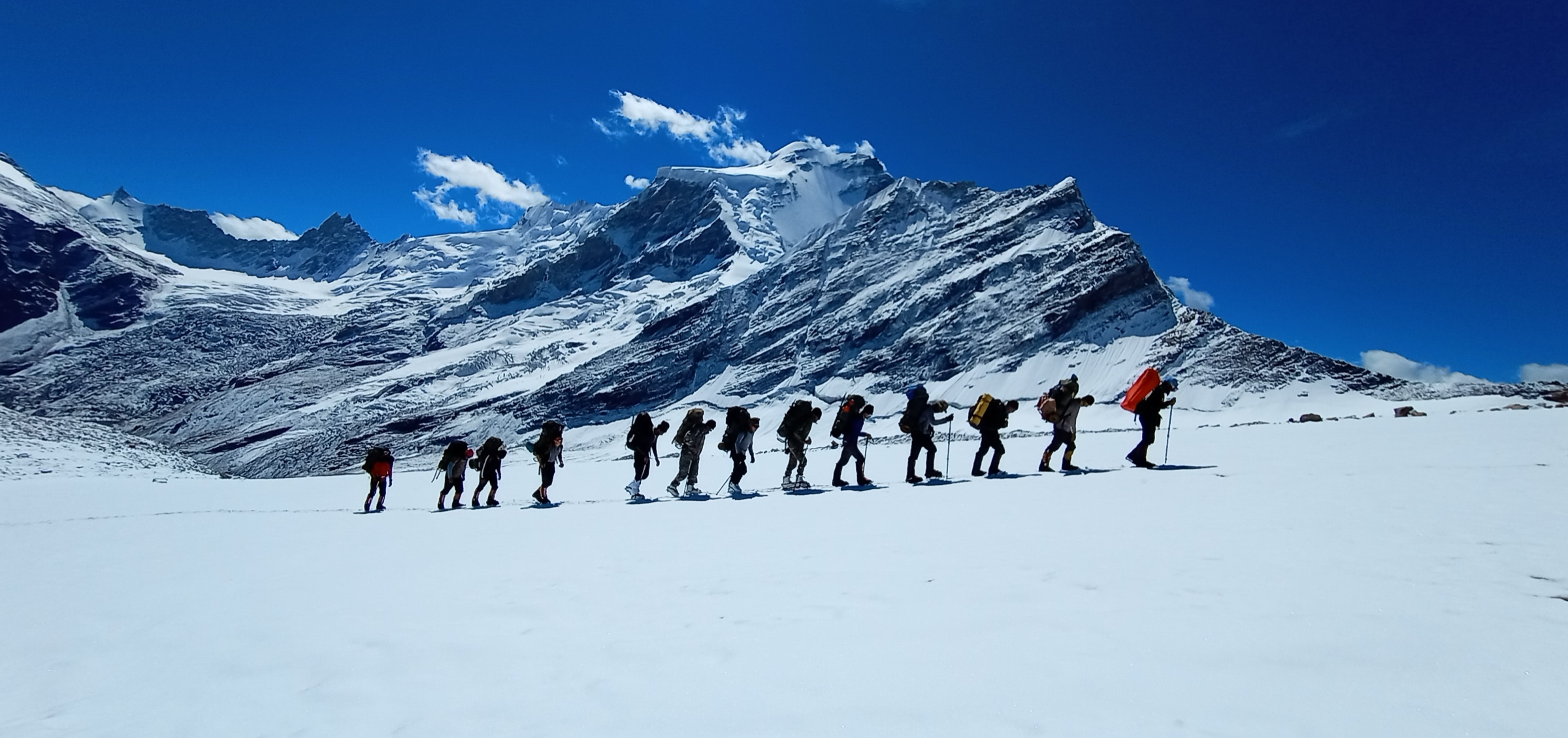
Towering above the rugged Suru Valley in the Zanskar Range, Mount Kun is India’s premier technical seven-thousand-metre expedition peak. At 7,077 metres, this glaciated fortress demands uncompromising technical mastery, unyielding mental discipline, and formal high-altitude siege experience. Guarded by the undulating Shafat Glacier, an infamous sixty-five degree blue ice wall, and an expansive snow plateau, Kun serves as the definitive stepping stone to eight-thousand-metre Himalayan giants. It suits seasoned alpinists who have previously summited multiple six-thousand-metre peaks and possess advanced ice-climbing proficiency.
Your expedition follows a fourteen-day alpine siege protocol from Shafat Nala, establishing three intermediate camps above the glacier. The crux involves ascending the formidable sixty-five degree blue ice headwall between Camp 1 and Camp 2, demanding hours of sustained front-pointing and heavy load carrying on fixed ropes. On summit morning, roped teams launch at midnight across the windswept snow plateau, braving minus thirty degrees wind chills and eighty-degree summit crest exposure. You push through ten to twelve continuous hours of thin air before executing technical descents.
Day by day
A disciplined fourteen-day alpine siege from Shafat Nala, negotiating the 65° blue ice headwall and high snow plateau to reach the 7,077-metre summit of Mount Kun.
Sleeping altitude, night by night
Suru Valley progression curve to MOUNT KUN summit ridge
Drive west from Leh along the Indus and Suru rivers to the roadhead at Shafat Nala. Settle into expedition camp and conduct initial baseline medical evaluations and pulse oximetry readings.
What's included
Everything required for complete self-sufficiency on a severe 7,000-metre Himalayan expedition is provided, from high-altitude fixed lines to satellite communications.
Included
- IMF climbing permits & environmental fees:Official Indian Mountaineering Foundation peak permit, liaison officer royalties, and local conservation environmental clearances.
- Veteran military mountain guides (1:2 ratio):Decorated Ex-HAWS instructors and certified UIAGM/IMF high-altitude Sherpas maintaining an unyielding 1:2 guide-to-climber ratio.
- Complete high-camp infrastructure:Four-season geodesic mountain tents at Camps 1, 2, and 3, insulated sub-zero sleeping pads, and heated mess dome at Base Camp.
- Fixed rope hardware & route-fixing kit:Heavy-gauge dynamic and static climbing ropes, snow pickets, ice screws, deadmen anchors, and mechanical ascender rigging.
- High-altitude expedition nutrition:Fresh nutritious Base Camp dining and freeze-dried high-calorie ration packs, hot electrolytes, and boiled snow water at high camps.
- Emergency medical & oxygen apparatus:High-flow supplementary oxygen sets with Russian regulators for emergency use, Gamow hyperbaric chamber, and Garmin inReach SOS.
Not included
- Personal climbing boots & technical kit:Triple mountaineering boots, technical ice axes, crampons, harnesses, and -40°C down suits (available for rent at Leh Base HQ).
- Mandatory high-altitude medical evacuation insurance:Insurance policy covering technical helicopter evacuation up to 7,500 metres and emergency medical hospitalisation.
- Domestic and international flights:Air travel to and from Kushok Bakula Rimpochee Airport (IXL) in Leh.
- Personal summit bonus tips:Customary gratuity pool distributed directly to high-altitude climbing Sherpas, base camp cooks, and logistical porters.
- Single room supplement in Leh:Private room upgrades in Leh before and after the mountain expedition phase.
- Personal medical prescriptions:Individual supplies of Diamox, personal antibiotics, blister care, and preventative medications.
What to pack, and what you can rent
Pack personal moisture-wicking base layers, technical alpine outerwear, and cold-weather clothing using our comprehensive kit list. High-grade mountaineering hardware—including 6,000m/8,000m double boots, crampons, ice axes, and sub-zero down sleeping bags—can be fitted and rented directly from our Leh Base HQ locker.
Booking & Cancellation Policies
Payment
A 25% non-refundable deposit confirms your roster placement. Balance is payable 45 days prior to arrival in Leh.
If you cancel
Cancellations outside 45 days forfeit deposit. 45–30 days forfeits 50% of fee. Under 30 days, no refund is granted.
If we cancel
If RRU cancels due to civil restrictions or severe political disruption, 100% of fees paid are credited to future departures.
Common questions
Specific operational guidance for Kang Yatse II (6,250m)
Mount Kun requires prior summits above 6,000 metres on glaciated peaks such as Kang Yatse I, Mentok Kangri, or Chamser Kangri. You must possess proven competence in ascending 65° fixed ropes on mechanical ascenders, self-arrest, and sustained endurance in sub-zero conditions. Review our [alpine training guide](/learn/training) for prerequisite standards.
Ready to take on India’s premier seven-thousand-metre peak?
Speak directly with our veteran Himalayan expedition instructors to evaluate your alpine resume and technical readiness.
If this one is not right
Compare elevation profiles, duration, and terrain demands across alternative Himalayan itineraries.
Mt. Nun
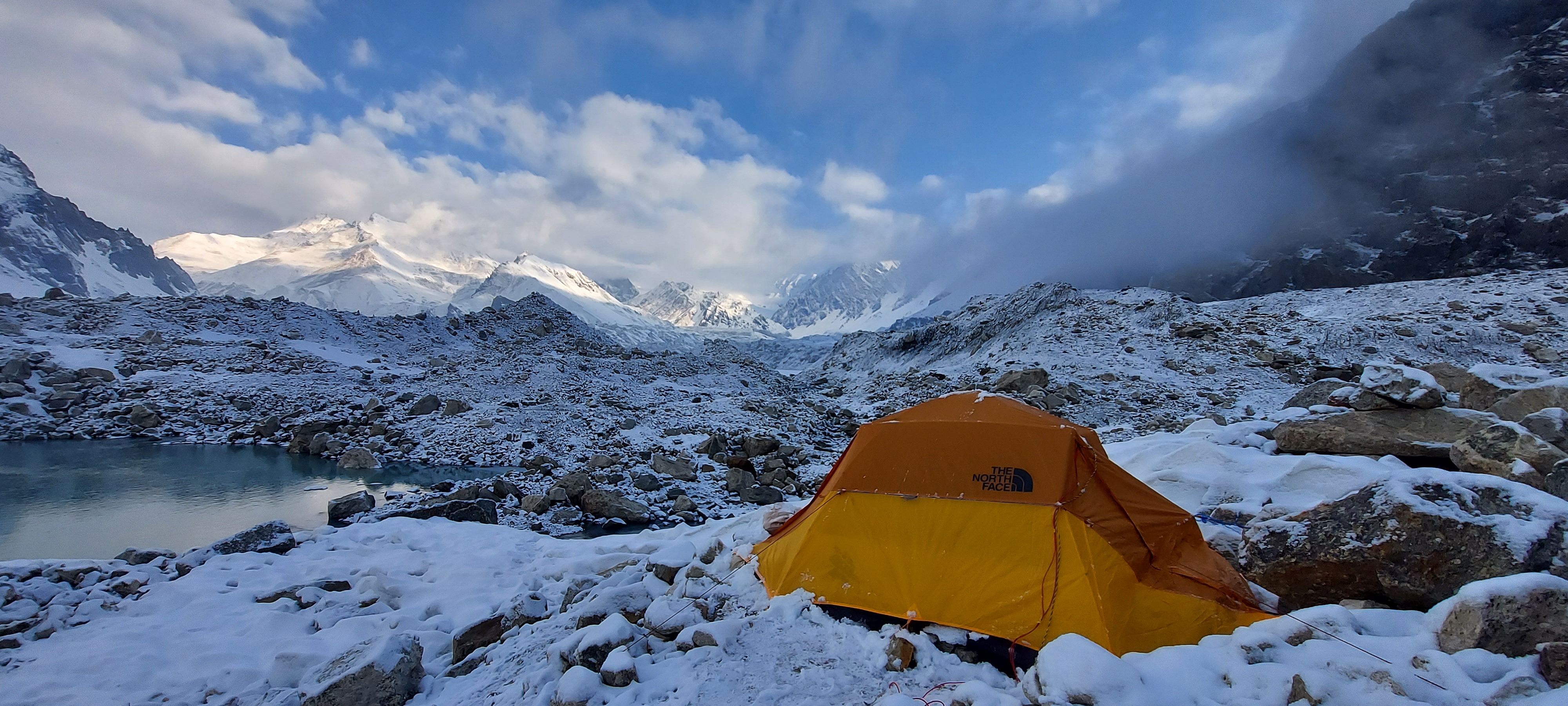
Twin peak to Kun and slightly higher at 7,135m, Nun offers a steeper technical rock-and-ice headwall on its northwest face for advanced alpinists seeking sustained technical difficulty.
Kang Yatse I
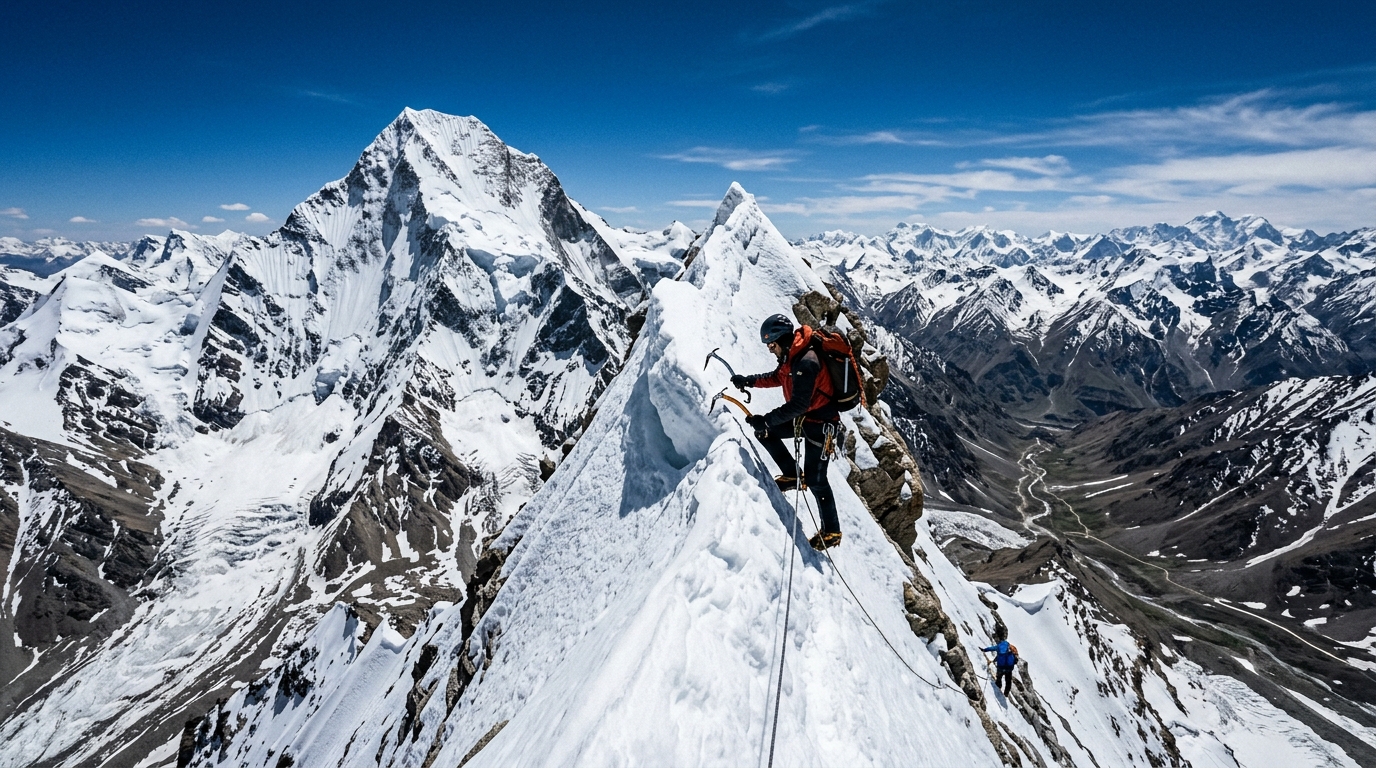
An ideal preparatory stepping stone to Mount Kun, featuring a 50° technical ice headwall and high camp logistics at 6,400 metres without the multi-camp siege commitment.
Mt. Kamet
For veteran alpinists who have mastered 7,000m peaks, Kamet represents India’s second-highest summit with an extreme siege via Meade Col demanding comprehensive Himalayan expedition maturity.