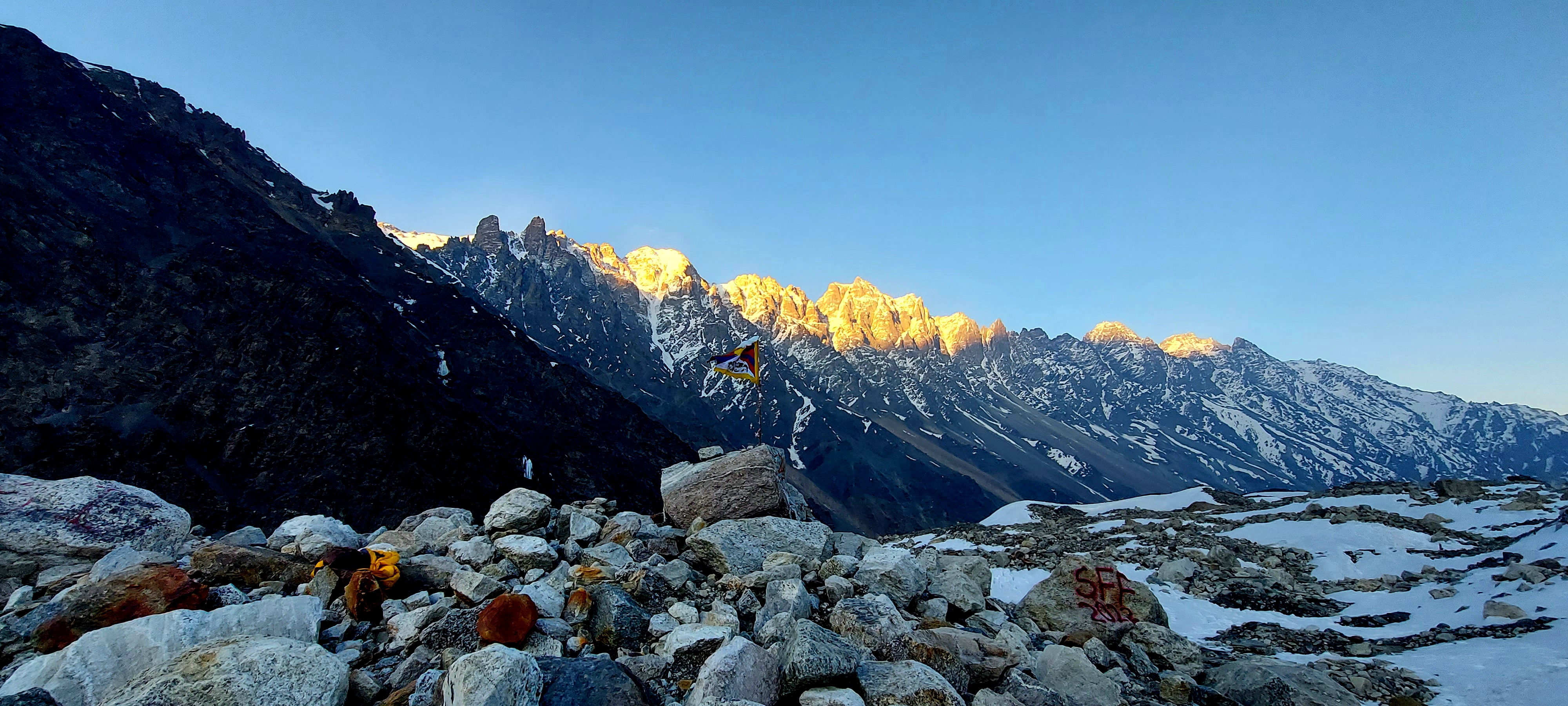
Responsible mountain travel in Ladakh begins with recognizing that the valleys and passes are living, sacred homes: always walk clockwise around chortens and mani stone walls, ask sincere permission before taking photos, treat horsemen and camp staff with genuine dignity, and carry every scrap of waste back down.
The Living Sacred Landscape of Ladakh
When you hike into valleys like Markha, Nubra, or Changthang, you will see white stone stupas (chortens) guarding village entrances, carved mani stones inscribed with the compassion mantra *Om Mani Padme Hum*, and colorful prayer flags streaming in the wind.
For local communities, these are not picturesque photo backdrops—they are consecrated sacred anchors that protect travelers and maintain harmony between humans and the natural elements.
The fundamental rule of respect is effortless: always walk to the left of chortens, mani walls, and shrines, so that the sacred structure remains on your right (clockwise circumambulation). Never sit on carved prayer stones, move them, or take small pebbles as souvenirs.
Homestay Etiquette and the Magic of "Julley"
In many mountain villages, you will stay in traditional Ladakhi homestays built from sun-dried mud bricks and poplars. These homes are warm sanctuaries where families welcome tired trekkers into their central kitchens.
Always remove your hiking boots at the threshold before stepping onto wool carpets. Accept food and cups of butter tea with both hands as a gesture of humility and respect.
The Ladakhi word *"Julley"* (pronounced joo-lay) is an all-encompassing greeting that means hello, goodbye, thank you, and peace. Speaking it with a gentle smile and slight bow of the head bridges language barriers instantly.
The Real Heroes: Horsemen, Cooks, and Mountain Porters
An expedition succeeds or fails on the skill, dedication, and resilience of the mountain support staff: the horsemen guiding pack ponies across icy rivers, the kitchen crew preparing hot nourishing meals at 5,000m, and the local guides setting safety lines.
We believe deeply in fair expedition ethics: ensuring all staff receive proper warm tents, insulated sleeping gear, hot nutritious food equal to our climbers, and strict weight limits for pack animals.
Treat your expedition crew with the warmth and dignity of equal teammates. A kind word in the morning, helping pitch a mess tent when winds howl, or sharing a joke around the stove creates bonds that last long after the climb.
Leaving Zero Trace on Glacial Waters
In the rain-shadow desert of Ladakh, glacial meltwater streams are the lifeblood of entire farming communities downstream. An unwashed pot or dumped battery at 5,000m can poison the drinking water of children in villages miles below.
Never wash dirty dishes, gear, or clothes directly in open streams—always carry water 50 metres away and use biodegradable soaps. Carry out every scrap of personal trash, including foil snack wrappers, wet wipes, and blister tape, all the way back to Leh for responsible disposal.
“We are visitors in these valleys. Leave the mountains cleaner than you found them, and treat every person who helps you along the way as family.”