Expedition fitness is not about explosive speed or heavy gym maxes—it is about moving steadily uphill under a 12kg rucksack for 8 to 12 hours without panic. Focus on conversational Zone 2 cardio, step-ups with a weighted backpack, strong core balance, and multi-hour weekend trail hikes.
The Real Nature of High-Altitude Fitness
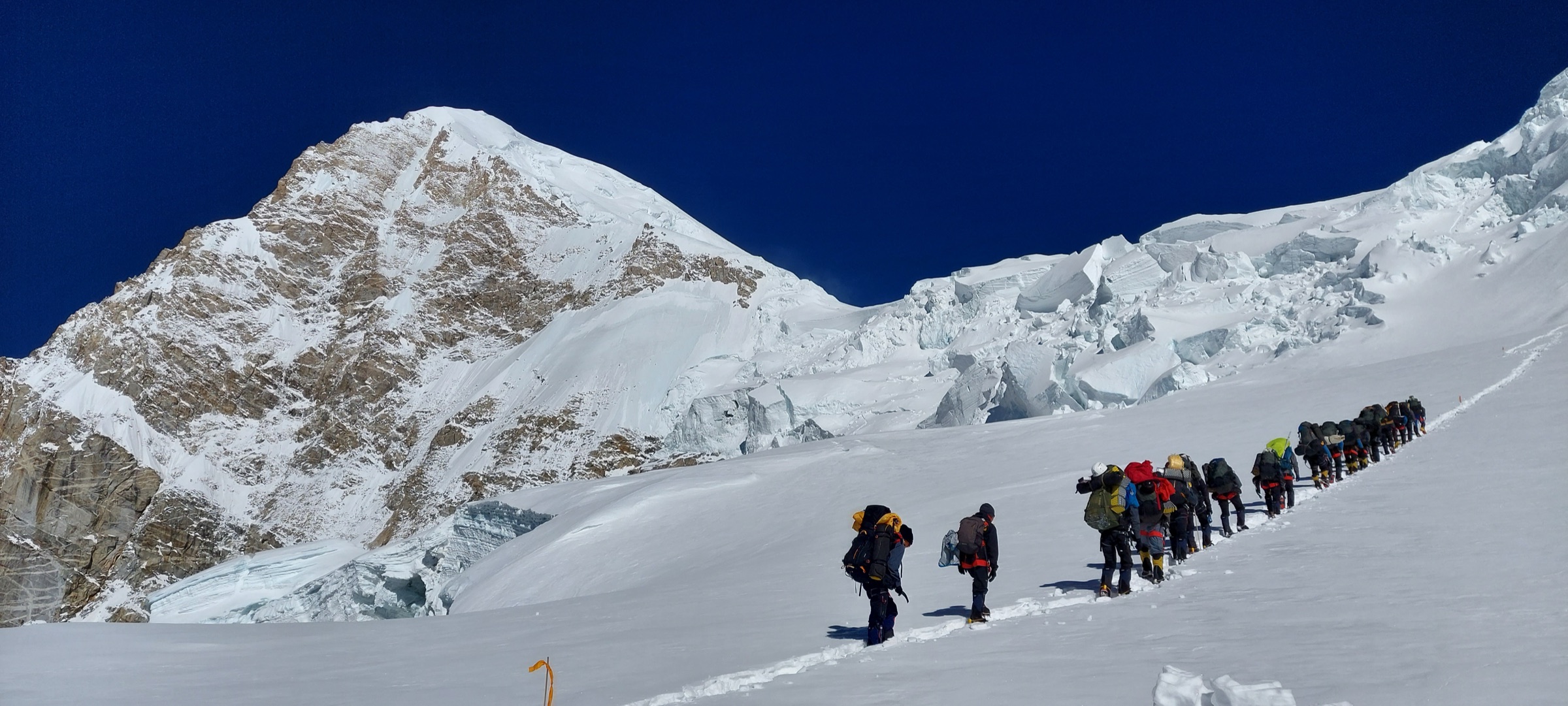
On summit day on a peak like Kang Yatse II or Dzo Jongo, your alarm sounds at midnight. You strap on your crampons in freezing temperatures, tie into a climbing rope, and spend the next 7 hours moving steadily uphill in forty-degree snow before the sun even touches the horizon.
That kind of effort doesn't require you to sprint a 5k in eighteen minutes. It requires what mountaineers call an "aerobic engine"—the quiet ability to burn fat for fuel, clear lactic acid smoothly, and keep putting one foot in front of the other at an easy, rhythmic pace.
If you train too hard and too fast in the gym, you train your body to rely on quick glycogen bursts that burn out in two hours. Slow, continuous endurance training builds the cellular stamina that keeps you moving for twelve hours.
The Staircase and the Weighted Pack
The single best workout for high-altitude climbing requires no expensive gym membership: a staircase, an incline treadmill, or a local trail, paired with a sturdy backpack.
Start with 6 to 8 kilograms of pack weight. Water bottles or bags of rice make ideal weights because you can adjust them easily or dump them out if your knees feel strained. Focus on tall posture, driving through the midfoot and heel, and keeping your breathing rhythmic enough that you could speak full sentences out loud.
Over eight to twelve weeks, gradually build to 12 to 14 kilograms for 60 to 90 minutes. You are not trying to set speed records; you are teaching your calves, lower back, and core stabilizers to carry expedition loads without fatigue.
Leg and Core Resilience: Protecting Your Knees on Descent
More climbing injuries occur on the descent than on the ascent. After standing on the summit, your leg muscles are tired, your focus begins to wander, and gravity multiplies the shock on your knees with every downward step on rocky moraine.
To build resilient joints, incorporate simple bodyweight and dumbbell movements twice a week: slow Bulgarian split squats, box step-downs, Romanian deadlifts for the hamstrings, and farmer's carries with kettlebells.
These movements strengthen the stabilizing ligaments around your knees and ankles, ensuring you have the control and balance needed to step over loose scree and glacier ice safely.
A Sensible 4-Day Weekly Training Rhythm
Tuesday: 45–60 minutes of low-intensity cardio (easy jogging, cycling, or rowing at conversational Zone 2 pace).
Thursday: 45 minutes of functional strength: lunges, step-ups, goblet squats, and core planks.
Saturday: 60–75 minutes of stair climbing or incline treadmill walking with an 8–12kg weighted backpack.
Sunday: Long outdoor hike in nature (3 to 5 hours with rolling terrain, moving at an easy, enjoyable pace).
Monday & Wednesday: Complete rest, gentle stretching, and quality sleep.
“Train for consistency, not exhaustion. In the mountains, the climber who stays relaxed and conserves energy is the one who summits safely.”